FxBytes

Enterprise software · since 2010

Your business is unique.
Your software should be too.

AI-powered software built around the way you actually work.

Rent what is commodity. Extend what already works. Own what makes your business different.

  • Rent
  • Extend
  • Own

Your code. Your data. Your IP.

  • Source 01

    Legacy ERP

  • Source 02

    Siloed CRM

  • Source 03

    Spreadsheets & docs

Orchestrationintegration · workflows

  • Owned software

    Your business logic. Your IP.

  • AI + data workflows

    Judgement, documents, forecasting

Your existing technology + your unique workflows = software that fits your business
0+
Years delivering
0+
Projects shipped
0%
Delivery
0%
Customer satisfaction

The diagnosis

Four gaps between your software and your business.

Every engagement we are called into sits in one of these. Each has a cost you are already paying, and a lane that closes it.

01

The Fit Gap

OWN LANE

Commodity software dictates the workflows that decide your price, your margin and your service level. The system holds the record; the real decisions happen in a spreadsheet somebody rebuilds every Monday.

The result

Your operating model is set by another company's roadmap.

The response

Classify the workflow. If it decides margin, it does not belong in a licence tier.

02

The Workaround Gap

EXTEND LANE

The platform is eighty percent right. The remaining twenty percent lives in exports, side sheets and email threads — and it is usually the part your customers feel.

The result

A permanent hidden operational tax that never appears on an invoice.

The response

Extend the platform properly instead of replacing it or papering over it.

03

The Integration Gap

EXTEND LANE

Quotes, stock, invoices or case status disagree between systems of record, so people become the integration layer and reconcile it by hand.

The result

Re-entry, latency and errors that no single system owns.

The response

Put a documented, monitored integration layer where the manual reconciliation is.

04

The Ownership Gap

OWN LANE

The software running your differentiator is rented. The rules your best people carry are retrained annually instead of encoded once.

The result

No compounding asset, no exit, and no control over the pace of change.

The response

Own the code, the data and the IP for the workflows that make you different.

The shift

AI changed the economics of software.

For twenty years, buy vs build had one honest answer: buy. Custom software was slow, expensive and risky to maintain, so companies rented their operating model and lived with the gaps.

The old maths was simple. A bespoke system meant a long discovery phase, a large team, a fragile test suite and years of maintenance nobody budgeted for. Against that, a licence fee looked like a bargain — even when the workflow it constrained was the one your business competed on.

AI-assisted engineering changed the inputs, not the principle. Discovery, design, implementation, testing, documentation and maintenance all got materially cheaper. Workflows that were indefensible to build in 2018 now pay back inside a budget cycle.

So the line between buy and build moved. The point is not that everything should be built. It is that the boundary needs redrawing — deliberately, workflow by workflow, with cost and risk attached.

Cost of owning a workflow · scope over time
Pre-AI delivery cost With AI-assisted engineering

Introducing · FxBytes Own Stack

Assess. Extend. Build. Own.

One engagement family, four stages, each closing a specific gap. Software-led delivery rather than a body count — you buy an outcome and keep the asset.

01Closes the Fit Gap

Assess

  • Classify every workflow as rent, extend or own — with cost and risk attached.
  • Leave with a written portfolio map, not a proposal.
02Closes the Workaround Gap

Extend

  • Build around Salesforce, ServiceNow and ERP without breaking upgrade paths.
  • Retire the export-and-reconcile step that costs you every week.
03Closes the Integration Gap

Build

  • Compose integrations, data and AI into one operational surface.
  • Ship in production increments you can measure, not a twelve-month programme.
04Closes the Ownership Gap

Own

  • Source, IP, infrastructure and documentation assigned to you.
  • Maintained so it is still worth owning three years later.

Workflow-engineered

Built from your decisions

We model the sequence of approvals, exceptions and pricing rules your business actually runs — not a template with your logo on it.

AI-accelerated

Ownership economics that used to be impossible

Discovery, implementation, testing and documentation are compressed by AI-assisted delivery, so bespoke workflows pay back inside a budget cycle.

Platform-agnostic

Your platforms, your cloud, no lock-in

Salesforce, ServiceNow, ERP, AWS or Azure. We extend what you have and hand back everything we build.

Selected work

Engagements, described by what changed.

Client names are withheld where confidentiality applies. Each of these began by classifying one workflow, not by scoping a build.

Legal operations

Own

Matter intake and conflicts, moved out of email

Decision
Intake was the firm's differentiator and its bottleneck. The practice management system could record matters but not shape how they were accepted.
Work
A custom intake and conflicts workflow integrated with the existing system of record, with rules owned by the firm's risk team.

Days → hours

Intake cycle time

Removed

Manual re-entry

The result

Intake moved from days of email into a controlled workflow, with acceptance rules owned by the firm rather than the vendor.

Manufacturing

Extend

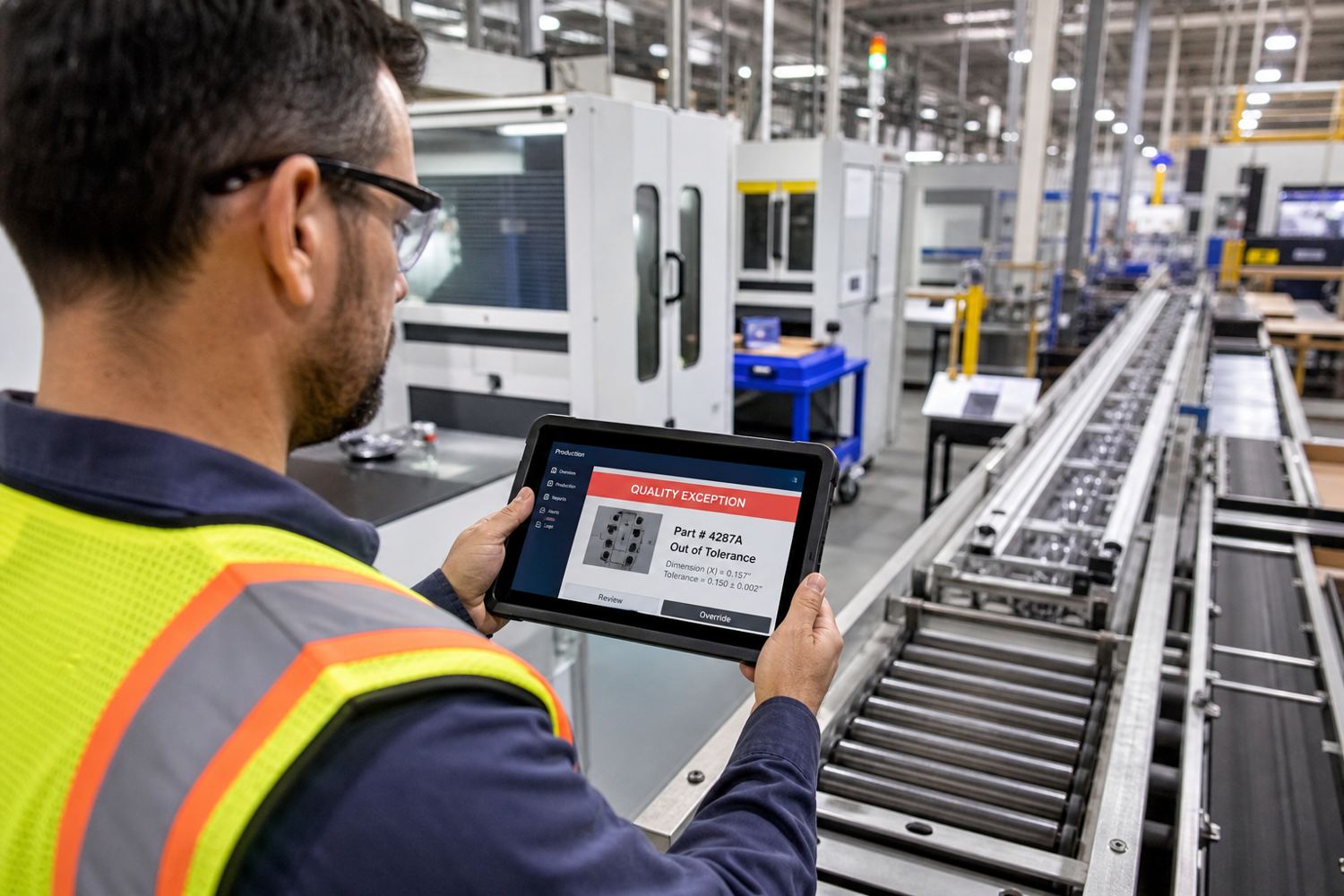
Quality exceptions surfaced where operations actually work

Decision
The ERP was correct and staying. What was missing was an operational surface for exception handling on the floor.
Work
An extension layer over ERP and MES data with a purpose-built exception workflow, on tablets, in the plant.

Measurably faster

Exception resolution

Retired

Shadow spreadsheets

The result

Exceptions are handled where the work happens — without moving the ERP or inventing another shadow process.

Service management

Extend

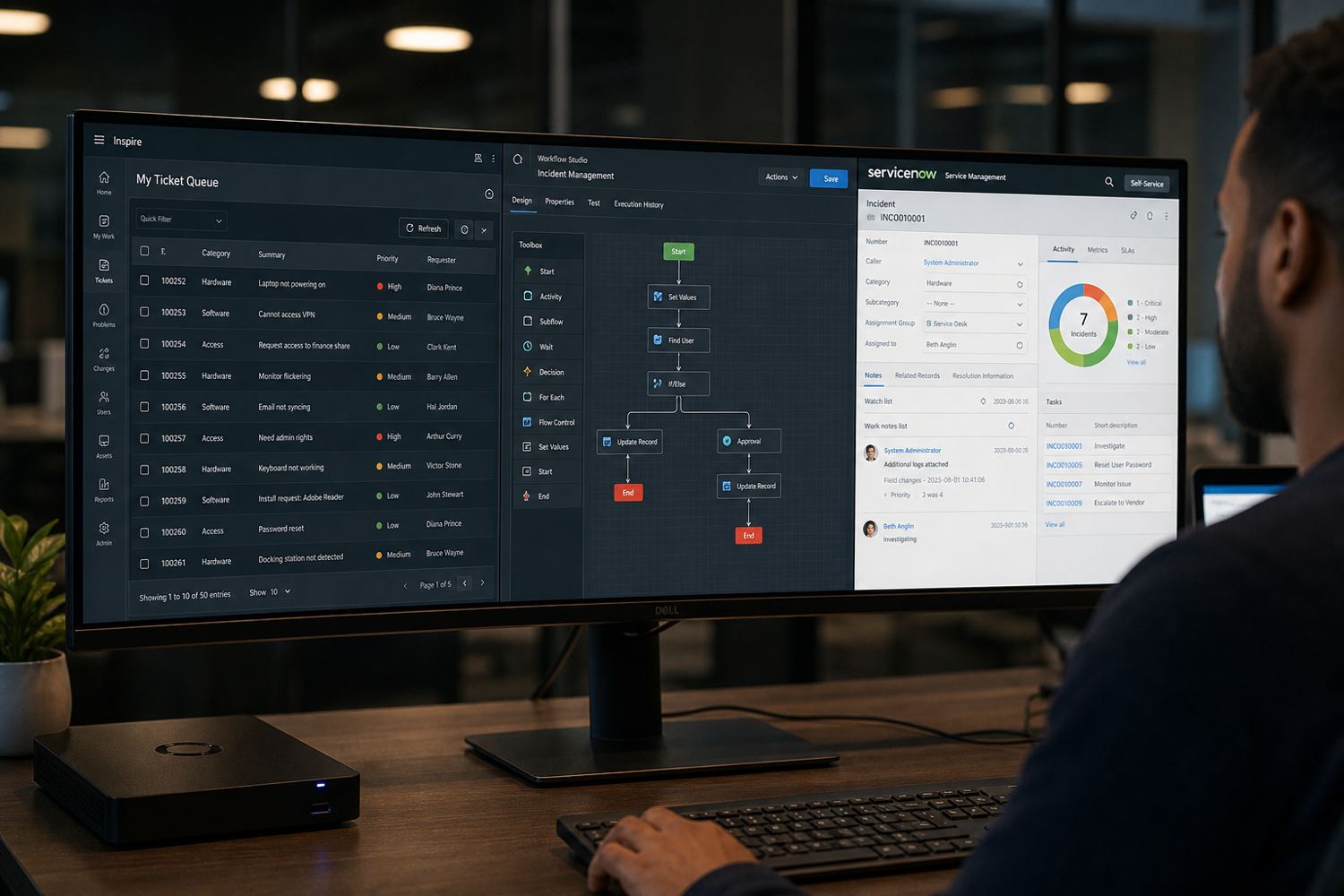
ServiceNow extended past its configuration ceiling

Decision
Eighty percent of the process fitted the platform. The remaining twenty percent was being forced into configuration that would not survive upgrades.
Work
Scoped applications and a custom service layer for the non-standard path, keeping the platform upgrade-clean.

Contained

Upgrade risk

Full

Process fit

The result

The remaining twenty percent lives outside configuration debt, so upgrades stay predictable.

The exception queue used to live in a spreadsheet three people fought over. Now it is software we own, and the ERP never had to move.

Operations Director — UK manufacturer [name withheld]

All case studies

How we behave

Six things you can hold us to.

Not values on a wall. These are the rules we run engagements by, and the ones worth checking us against.

  • We will tell you not to build

    If configuration or a subscription solves it, that is the recommendation. We would rather lose the work than sell you a system you did not need.

  • One workflow before a programme

    Every engagement starts small enough to measure. No twelve-month roadmap before anything is running in production.

  • AI where it earns its place

    We use AI heavily in delivery and only put it in your product where it beats a simpler rule. No model for the sake of a model.

  • Senior people, no layers

    You talk to the engineers doing the work. There is no account manager between you and the person changing the code.

  • Your accounts, your repository

    Code, data and infrastructure live with you from the first commit. Nothing is hostage to our continued involvement.

  • Working software over status reports

    Weekly demos of the real thing. If a week produced nothing you can click, we say that plainly.

Next step

We don’t just build software.
We help you decide what
software to build.

Answer four questions about one workflow — uniqueness, commercial leverage, platform fit and vendor risk — and see which lane it belongs in, with the reasoning attached.

About 3 minutes · no email required

Rent what is commodity.

Extend what already works.

Own what is strategic.