
FxBytes

Position paper

Ownership is a balance-sheet question.

The interesting question is not whether custom software is better. It is which workflows are worth owning, what that ownership costs to run, and what it protects you from.

For CIO · COO · CFO

A balance-sheet decision

Selective

Licence

Expense line

Renews · per seat

Owned software

Asset on the sheet

IP · code · diligence-ready

The interesting questions

  1. 01

    Worth owning?

    Strategic workflows only

    Not payroll. Not email. Where you compete.

  2. 02

    Cost to run?

    Host · secure · iterate

    Roadmap owner + real run cost, not a one-off build.

  3. 03

    Protects you from?

    Seat tax · vendor lag

    Lock-in, reprice on growth, roadmap you cannot steer.

Position

Own what is strategic

Audience
CIO / COO / CFO
Frame
Asset vs. licence
Horizon
3–5 years
Position
Selective ownership

What ownership buys

Four returns that show up on the P&L

  1. 01

    Control of your operating model

    Your process stops being a compromise between how you work and what a vendor's data model permits.

  2. 02

    Cost that decouples from headcount

    Owned systems don't reprice when you grow. Per-seat economics punish exactly the success you are planning for.

  3. 03

    Speed on the things that matter

    A change to a strategic workflow becomes a sprint decision instead of a vendor roadmap request.

  4. 04

    An asset, not an expense line

    Working software with clean IP, documentation and tests is a durable asset in diligence conversations.

Portfolio console · 34 workflows mapped
Own

Quote-to-contract

92%
Own

Matter intake

84%
Extend

Salesforce pricing rules

66%
Extend

ServiceNow change flow

58%
Rent

Expense management

22%
Rent

Payroll

14%

Ownership is portfolio management, not a single build decision

Honest arithmetic

What ownership costs

We would rather lose an engagement than sell a build that becomes an orphan.

  • Someone must own the roadmap internally

    Ownership without a product owner decays.

  • Run cost is real

    Hosting, monitoring, security updates, support expectations.

  • The first version is never the last

    Budget for iteration, not a single project.

  • Bad candidates for ownership stay bad candidates

    However cheap building becomes.

Compare the fully loaded cost of the current process — licences, integration effort, manual reconciliation, error cost — against build plus five years of run. Ownership should win clearly, or you should keep renting.

How we frame it with finance teams
When ownership is wrong

Three cases where we tell clients not to build

  1. 01

    The problem is genuinely common

    Payroll, accounting, email, device management. The market solves these better than any bespoke effort will.

  2. 02

    No internal owner exists

    Without a named business owner and a change budget, an owned system becomes legacy on day one.

  3. 03

    The process is about to change fundamentally

    Codifying a process mid-reorganisation buys you an expensive record of a decision you are about to reverse.

Terms

Ownership has to be contractual, not implied

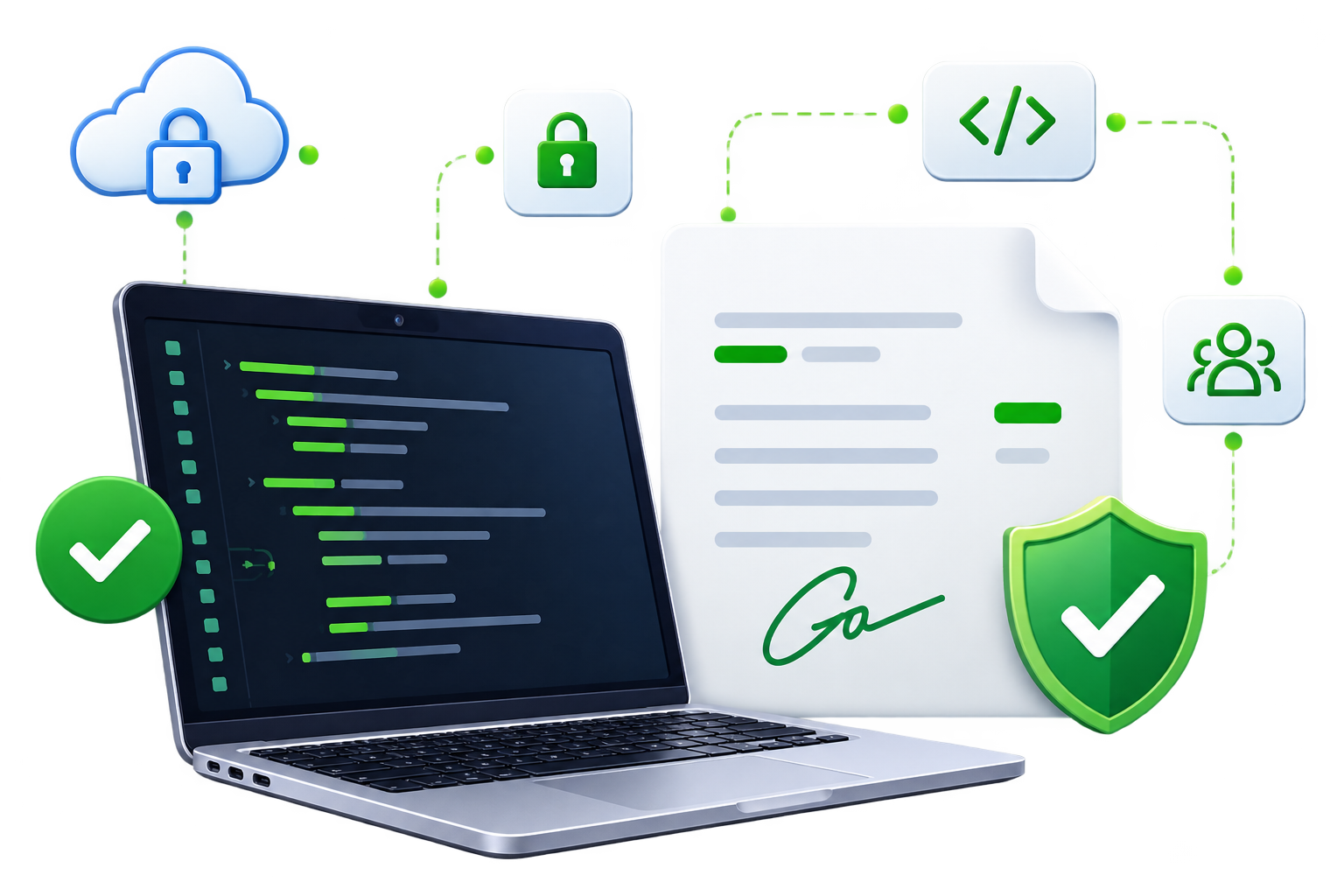
Code, contract and ownership — repositories, signed terms and secure handover
  1. Code and IP transfer on delivery

    Repositories live in your organisation from the first commit, not at the end of a project.

  2. Infrastructure in your accounts

    Cloud, secrets and data stay under your control and your compliance regime.

  3. Documented handover

    Architecture decisions, runbooks, tests and onboarding notes are deliverables, not favours.

  4. No lock-in by obscurity

    Mainstream stacks, standard patterns, and a team that can be replaced — including us.

  5. Owning the team, too

    Where the capability should live inside your business, we build the engineering team, operate it, and transfer it to you — Build-Operate-Transfer.

Next step

Should you own it? Let's do the arithmetic.

Bring one workflow you suspect is strategic. We will map the current cost, the build cost and the five-year position with you.